RFID Blocking Card Review: Does It Really Work? What You Should Know Before Buying ?
Contactless payments make everyday shopping faster and more convenient. From tapping a credit card at a checkout counter to using a contactless debit card while travelling, these payment methods have become part of daily life.
However, this convenience also raises a common question: Can someone scan your contactless card without your knowledge, and can an RFID blocking card help protect it?
One product designed for this purpose is the RFID blocking card. Marketed as a wallet-friendly security accessory, it is intended to help reduce unwanted RFID or NFC communication under compatible conditions.
But is an RFID blocking card worth considering? How does it work, and what should you know before purchasing one?
In this guide, we explain the technology, discuss potential benefits and limitations, and highlight the important things to check before choosing an RFID protection product.
Affiliate Disclosure: This article may contain affiliate links. If you purchase through a link on this page, we may earn a commission at no additional cost to you. This does not change our goal of providing balanced and useful information.
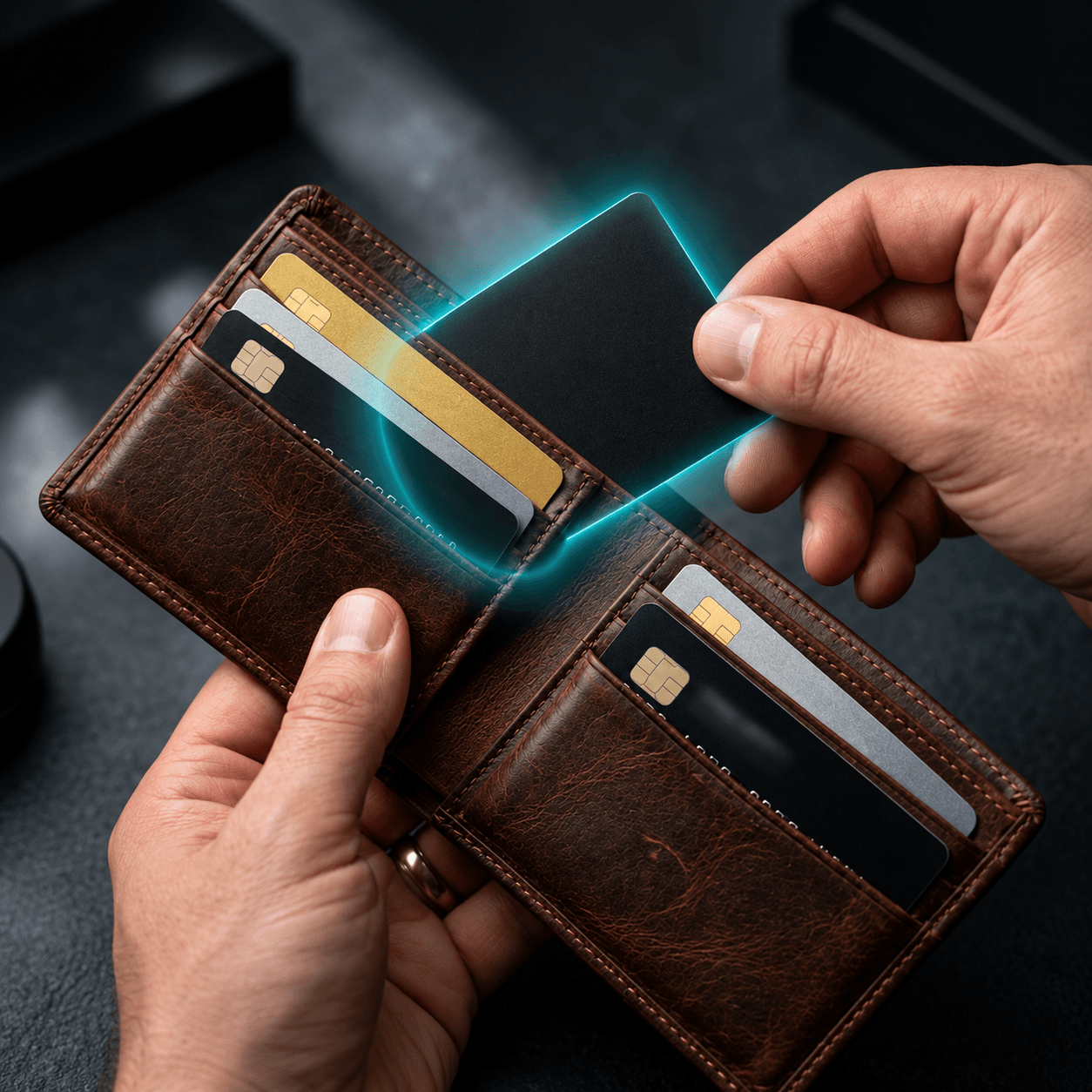
But how does an RFID Blocking Card work? Is it necessary for everyone, and what should you check before buying one?
In this guide, we explain the basics of RFID blocking technology, its potential benefits and limitations, and the important factors to consider before choosing a card.
What Is an RFID Blocking Card?
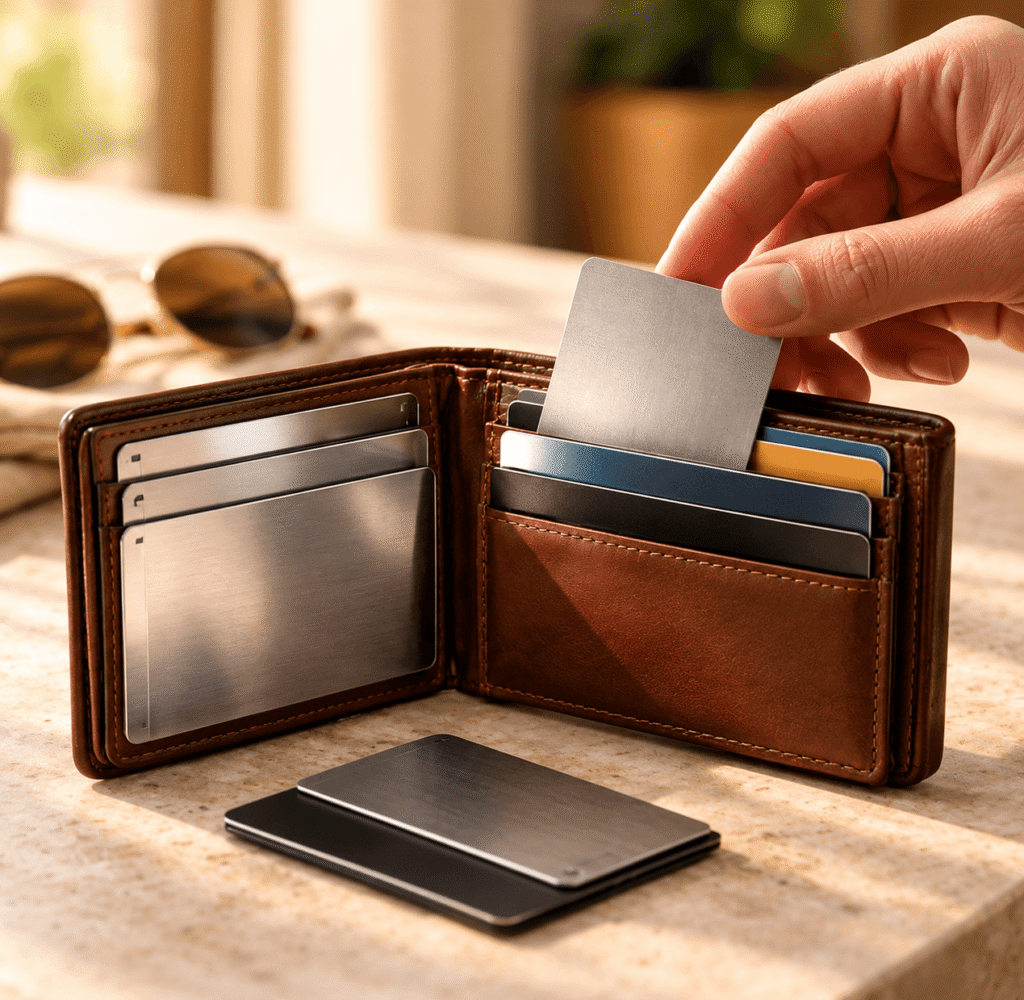
An RFID Blocking Card is a slim card-shaped accessory designed to help reduce or block certain radio-frequency signals used by compatible contactless cards.
RFID stands for Radio Frequency Identification. Some contactless payment cards use radio-frequency communication to exchange information with compatible readers over a short distance.
An RFID Blocking Card is designed to be carried inside a wallet alongside your payment cards. Depending on its design and construction, it may help interfere with the signals used in certain contactless scanning situations.
However, not all blocking cards work in the same way. Their effectiveness depends on the technology, design, positioning and compatibility of the cards being protected.
How Does an RFID Blocking Card Work?

Contactless cards use short-range wireless communication to interact with compatible readers. An RFID Blocking Card is designed to interfere with or reduce these signals under suitable conditions.
The basic concept is simple:
- Contactless communication: A compatible card communicates wirelessly with a nearby reader.
- Blocking technology: The RFID Blocking Card is designed to interfere with certain radio-frequency signals.
- Wallet placement: The blocking card is placed alongside the contactless cards according to the product’s instructions.
- Signal interference: Under compatible conditions, the blocking card may help prevent a reader from communicating with the protected card.
Actual performance varies between products and setups. A visual illustration can explain the concept, but it does not prove that a particular card blocks every signal or prevents every type of fraud.
Potential Benefits of an RFID Blocking Card

1. Slim and Convenient Design
Most card-shaped blocking accessories are designed to fit inside a wallet without requiring a separate protective case. This can be convenient for people who prefer to carry only essential items.
2. Simple Everyday Use
A compatible RFID Blocking Card generally does not require an app or regular charging. Follow the supplied instructions for placement and use.
3. An Additional Security Measure
Some people prefer an extra layer of protection for compatible contactless cards, particularly when carrying a wallet in crowded public places or while travelling.
It is important to remember that an RFID Blocking Card is only one possible precaution. It does not replace safe banking practices, account monitoring or responsible handling of payment cards.
4. Useful for Travel
When travelling, people often carry payment cards, identification and other important items in the same wallet. A slim blocking card may be convenient for those who want an additional precaution without carrying a bulky accessory.
Its usefulness depends on the types of cards you carry and the effectiveness of the particular product.

Does an RFID Blocking Card Really Prevent Card Fraud?
An RFID Blocking Card may help interfere with certain compatible contactless signals, but it should not be considered a complete solution for preventing financial fraud.
There are several important distinctions:
- Signal blocking is not fraud prevention: Blocking a particular wireless signal does not stop every way in which payment information or account details might be compromised.
- Compatibility matters: Different cards and blocking products may use different technologies.
- Placement matters: The card must be positioned as instructed for the intended effect.
- Performance varies: A product’s effectiveness should be supported by credible testing rather than marketing claims alone.
An RFID Blocking Card should not be assumed to protect against phishing, stolen cards, online scams, account takeovers or every type of unauthorised transaction.
For better overall security, use transaction alerts, protect your PIN, monitor account activity and report suspicious transactions to your bank promptly.
What Are the Limitations of an RFID Blocking Card?
Before buying one, consider these limitations.
It May Not Work With Every Card
Different payment cards and access cards may use different communication technologies. Check whether the blocking card is compatible with the cards you intend to protect.
Effectiveness Can Vary
The level of interference depends on the product’s construction, the cards involved, their positioning and the surrounding conditions.
It Does Not Replace Other Security Measures
A blocking card cannot protect you from every financial or digital threat. Good account security habits remain essential.
Marketing Claims Need Verification
Be cautious of claims that a card guarantees complete security or prevents all forms of contactless fraud. Look for clear product specifications, credible test information and understandable instructions.
How to Choose the Right RFID Blocking Card

Use this checklist before making a purchase.
1. Check Compatibility
Confirm which RFID or NFC frequencies and card types the product is designed to work with. Do not assume that every card-shaped blocker supports every contactless system.
2. Look for Clear Testing Information
Prefer products that provide meaningful details about their blocking performance or testing methods. Avoid relying solely on broad claims such as “100% protection” without supporting evidence.
3. Consider Thickness and Size
Check the dimensions and thickness to make sure the card fits comfortably inside your existing wallet.
4. Read the Usage Instructions
Find out where the card should be placed relative to your contactless cards. Follow the instructions rather than assuming that any position will provide the intended effect.
5. Review the Pack Contents
Confirm the number of cards included, the material, the listed specifications and any warranty or return conditions before ordering.
6. Compare Price With Practical Value
A higher price does not automatically mean better performance. Compare the available specifications, evidence, usability and return policy before deciding.
RFID Blocking Card vs. RFID Blocking Wallet
Both options are intended to help reduce unwanted radio-frequency communication with compatible cards, but they differ in how they are used.
| Feature | RFID Blocking Card | RFID Blocking Wallet |
|---|---|---|
| Design | Slim, separate card | Wallet with integrated blocking material |
| Existing wallet | Usually can be used with your current wallet | Requires using the protective wallet |
| Convenience | Easy to move between compatible wallets | Protection is built into the wallet’s design |
| Compatibility | Depends on the card and placement | Depends on the wallet’s construction |
| What to check | Testing, instructions and compatibility | Testing, construction and compatible card placement |
Neither option should be assumed to provide complete protection against all types of fraud. Choose based on your needs, budget and the evidence available for the particular product.
Is an RFID Blocking Card Worth Buying?
An RFID Blocking Card may be worth considering if you want a slim accessory designed to interfere with certain contactless signals and prefer to keep using your existing wallet.
Before buying, check the product’s compatibility, independent or credible testing information, dimensions, instructions and return policy.
If you are mainly concerned about financial fraud, remember that protecting your accounts also requires strong security habits. Enable transaction alerts, monitor your statements, never share your PIN or one-time passwords, and contact your bank if you notice suspicious activity.
Our recommendation: Treat an RFID Blocking Card as a possible additional precaution, not a guarantee of security. Make your decision based on verifiable product information rather than fear-based marketing.
Frequently Asked Questions
1. What does an RFID Blocking Card do?
It is designed to interfere with certain radio-frequency signals used by compatible contactless cards. Its actual effectiveness depends on the product and the conditions in which it is used.
2. Does an RFID Blocking Card need a battery?
Many passive card-shaped blockers do not require a battery or charging. Check the specifications of the particular product before buying.
3. Where should I place an RFID Blocking Card?
Follow the product’s instructions. Placement can affect performance, and you should not assume that one card will protect every card in a wallet regardless of their arrangement.
4. Can an RFID Blocking Card stop all contactless fraud?
No. It should not be treated as a guarantee against all fraud or unauthorised transactions. It does not replace account monitoring and other security precautions.
5. Is an RFID Blocking Card better than an RFID blocking wallet?
Neither is automatically better. The right choice depends on the product’s demonstrated performance, your wallet, compatibility and personal preference.
6. How can I check whether an RFID Blocking Card is reliable?
Review the specifications, compatibility information, usage instructions, credible test evidence, customer feedback and return policy. Be cautious of absolute protection claims that are not supported by evidence.
7. Is an RFID Blocking Card necessary for everyone?
Not necessarily. Your needs depend on the cards you carry, your concerns and the available evidence about the product. Consider the practical benefits and limitations before purchasing.
Final Verdict
An RFID Blocking Card is a compact accessory designed to help interfere with certain contactless signals. Its slim format may appeal to people who want an additional precaution without replacing their existing wallet.
However, its performance depends on compatibility, construction and correct placement. It should not be viewed as a guaranteed defense against financial fraud.
Before buying, compare the available specifications, look for credible testing information and choose a product that fits your everyday needs.
Thinking about buying an RFID Blocking Card?
Review its specifications, compatibility, pack contents and return policy before making your decision.
Affiliate Disclosure: This article may contain affiliate links. If you purchase through a link on this page, we may earn a commission at no additional cost to you. This does not change our goal of providing balanced and useful information.
Thank you for reading this far! If you found this guide useful, feel free to share it with someone who might need it.
Looking for something else to read next? Don’t miss our beginner-friendly guide:– How to Set Up a YouTube Studio at Home: The Complete Beginner-to-Pro Equipment Guide.